


Nuremberg is located in the Franconia region, in northern Bavaria, and has excellent connections by train, bus, and plane. Although it is smaller than cities like Munich or Berlin, getting there is very easy.
The city has Nuremberg Airport (NUE), which receives domestic and international flights. In addition, many travelers arrive through larger nearby airports such as Munich (MUC) and Frankfurt (FRA), combining their journey with Germany's high-speed trains.
In this guide, we show all the options for getting to Nuremberg, how to leave the airport, which train connections to choose, and how public transportation works inside the city.
💡 Money-saving travel tip
Before buying your flight, compare different arrival airports. Sometimes flying to a larger German city and continuing by train can be cheaper than arriving directly in Nuremberg.
A good strategy is to search for flights arriving at:
- Nuremberg (NUE): the most convenient option.
- Munich (MUC): excellent train connections to Nuremberg.
- Frankfurt (FRA): a great option for international flights.
Flights from Brazil to Nuremberg
Currently, there are no direct flights between Brazil and Nuremberg. Most travelers arrive through another European airport and continue their journey by train.
The most common connections from Brazil are:
- Frankfurt: one of the best options, with fast train connections to Nuremberg.
- Munich: a very popular alternative among Brazilian travelers, especially because of the large number of international flights.
- Lisbon: a popular option for travelers flying with TAP.
- Paris: connection through Air France.
- Amsterdam: connection through KLM.
The total travel time is usually between 14 and 20 hours, depending on the connection chosen.
Nuremberg Airport (NUE)
Albrecht Dürer Airport Nuremberg (NUE) is located approximately 7 km from the historic center and is the main gateway for visitors arriving in the city.
Because it is a smaller airport, it is very easy to navigate. Signs are clear, walking distances inside the terminal are short, and there are convenient public transportation options connecting directly to the city center.
The airport offers restaurants, shops, car rentals, free Wi-Fi, and all the services needed for a comfortable arrival.
One major advantage is that you do not need to spend money on expensive taxis or private transfers: the subway connects the airport directly with central Nuremberg.
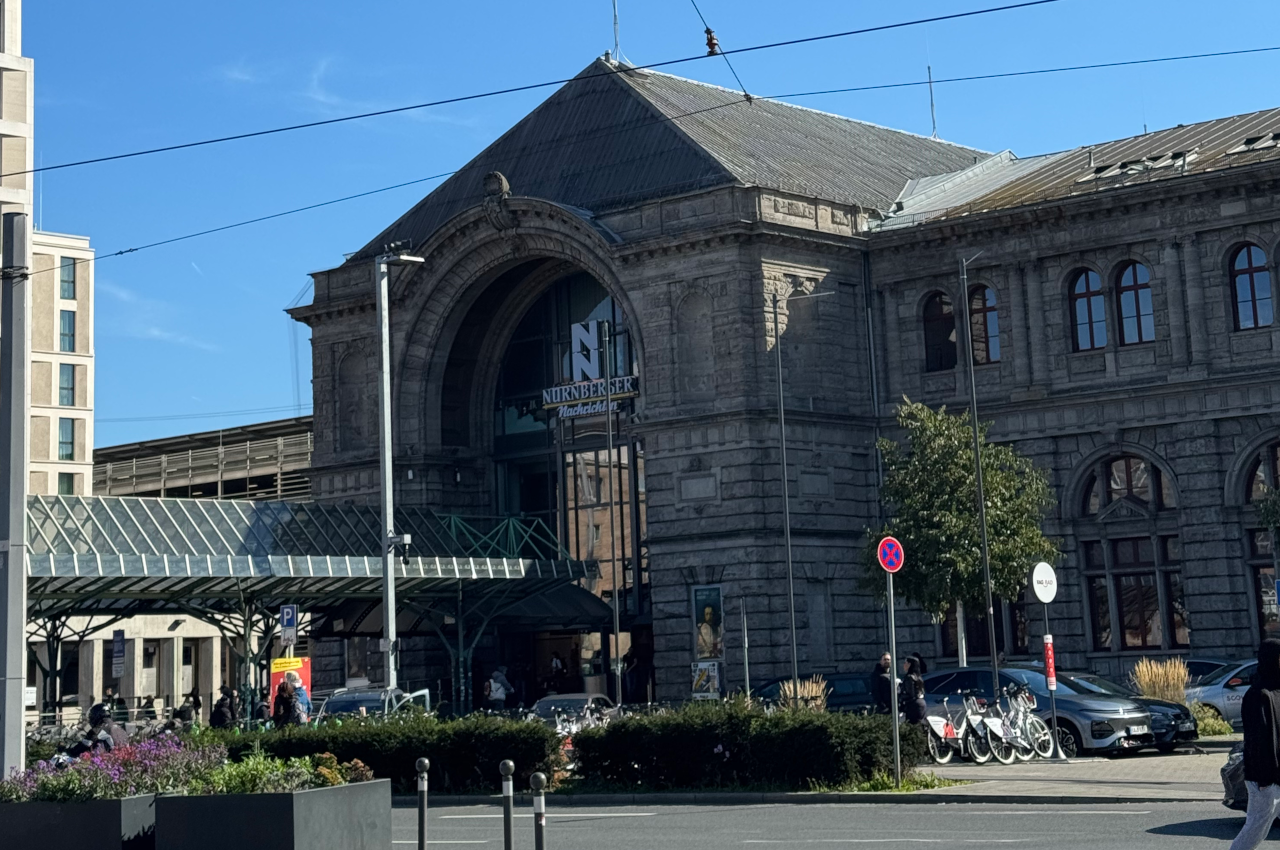
Arriving in Nuremberg by train
For many travelers, the train is the best way to reach Nuremberg, especially when starting the trip from another city in Germany.
The city has one of the most important railway stations in the region: Nürnberg Hauptbahnhof, located only a few minutes walking from the historic center.
From there, you can easily reach destinations such as Munich, Frankfurt, Berlin, Leipzig, and other German cities.
From Munich to Nuremberg
This is one of the most popular routes for tourists visiting Bavaria.
- ICE train: approximately 1 hour.
- Regional train: around 1h45 to 2 hours.
- Distance: approximately 170 km.
We took this route from Munich and it is one of the most comfortable ways to visit Nuremberg on a day trip.
From Frankfurt to Nuremberg
- ICE train: approximately 2h10.
- Advantage: an excellent option for travelers arriving at Frankfurt Airport.
Germany's railway system allows you to leave directly from Frankfurt Airport and continue to Nuremberg without needing to go through Frankfurt city center first.
How to get from the airport to Nuremberg city center
Nuremberg Airport (NUE) has one of the easiest airport-to-city connections in Germany.
Unlike large international airports, the airport is very close to the city center and public transportation is fast and affordable.
Nuremberg Airport (NUE): how to reach the historic center
The best way to reach central Nuremberg is by subway.
Option 1: U-Bahn (subway)
The U2 line connects the airport directly with Nürnberg Hauptbahnhof, the city's main train station, which is located close to the historic center.
- Travel time: approximately 12 minutes.
- Price: around €3–4 per person.
- Frequency: every few minutes during the day.
This is the option we recommend for almost all travelers. It is fast, safe, and very convenient even if you are traveling with luggage.
To check schedules, buy tickets, and plan routes, we recommend using the official transportation app:
VGN - public transportation in Nuremberg and the surrounding region
Option 2: Taxi or private transfer
For travelers with lots of luggage, late-night arrivals, or those who prefer more comfort, a taxi or private transfer can be an alternative.
- Travel time: approximately 15 to 20 minutes.
- Price: usually between €25 and €35 to the city center.
💡 Tip from our visit to Nuremberg
Since the airport is very close to the city center, we do not recommend spending money on a private transfer.
The subway is extremely easy to use and leaves you almost directly at the city's main train station.
How to get around Nuremberg
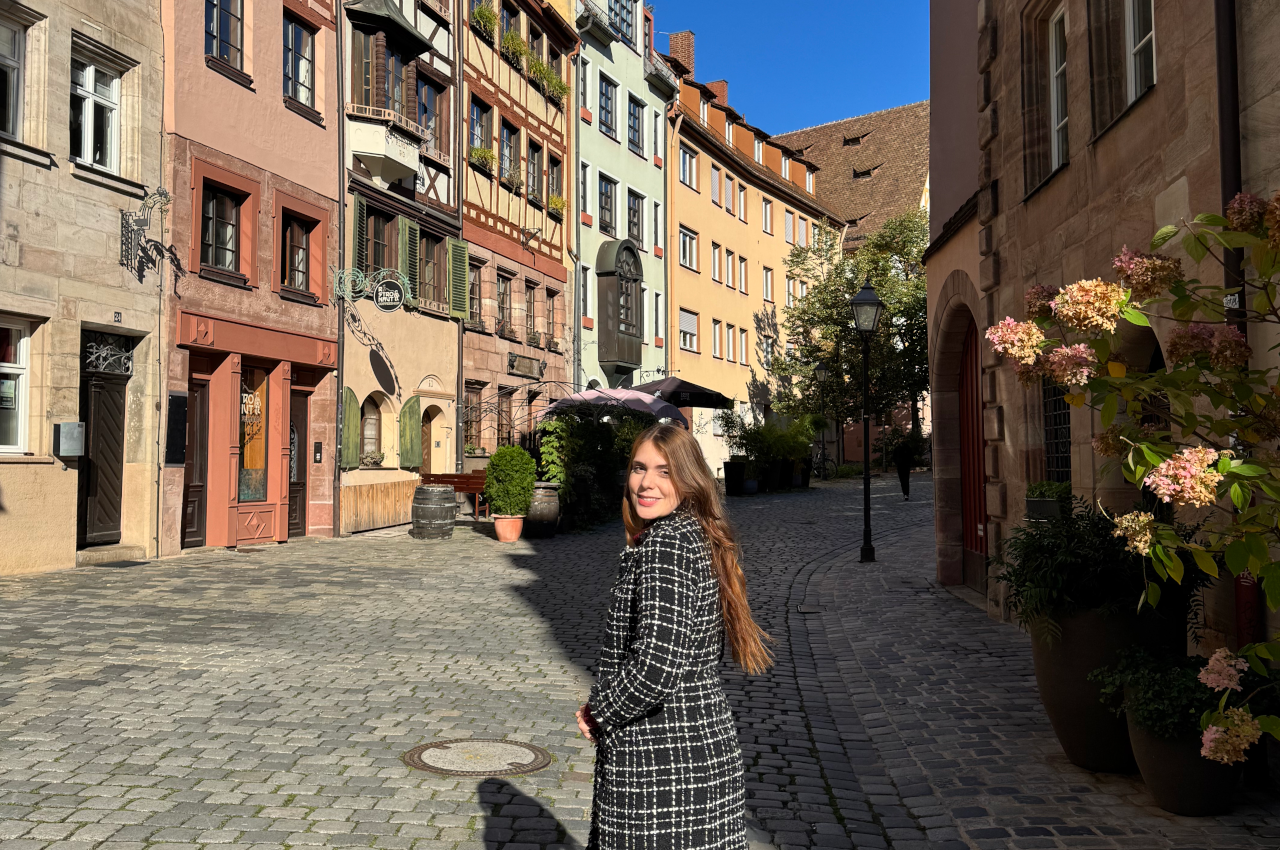
Nuremberg is a very pleasant city to explore on foot. Most historical attractions are concentrated inside and around the old town, known as Altstadt.
However, to reach some areas further away, visit museums, or stay outside the historic center, public transportation works very well.
The regional transportation system is managed by VGN (Verkehrsverbund Großraum Nürnberg), integrating subway, buses, trams, and regional trains.
During our visit, we noticed how easy the city is to explore: we did everything walking! The only more challenging part is the uphill walk to the castle.
Types of transportation in Nuremberg
- U-Bahn: the city's subway system, ideal for quick trips and reaching the airport.
- Tram: electric trams connecting different neighborhoods.
- Bus: completes the network and reaches areas without subway connections.
- S-Bahn: urban and regional trains used to reach nearby cities.
Public transportation tickets and prices in Nuremberg
For tourists, most attractions are concentrated in the central area, where many routes can easily be done on foot.
Prices may change, but these are good reference values for planning your trip:
| Ticket | Approximate price |
|---|---|
| Single ticket | ≈ €3–4 |
| Day ticket | ≈ €9–10 |
| Group day ticket | ≈ €15–20 |
To buy tickets, the easiest option is using the VGN app. You can also buy tickets directly from machines at stations.
💡 Tourist tip
Since Nuremberg's historic center is compact, you often do not need to buy transportation tickets every day.
If you are staying only one day in the city, you will probably be able to explore most of the main attractions walking.
Deutschlandticket: is it worth it for tourists in Nuremberg?
The Deutschlandticket is a monthly pass that allows you to use almost all regional public transportation in Germany, including buses, subways, trams, and regional trains.
For visitors to Nuremberg, it can be a great option, especially if you want to take day trips around Franconia and nearby cities, since many destinations can be reached using only regional transportation.
Some popular destinations from Nuremberg that can be visited using the Deutschlandticket are:
- Bamberg: one of Germany's most beautiful medieval cities and a UNESCO World Heritage Site.
- Rothenburg ob der Tauber: one of the most famous towns on Germany's Romantic Road, known for its medieval walls and colorful houses.
- Würzburg: famous for the Residence Palace, Franconian wines, and baroque architecture.
- Erlangen: a university city near Nuremberg, known for the Bergkirchweih festival.
- Fürth: a neighboring city of Nuremberg, easily accessible by regional transportation.
When is it worth buying it?
- Trips of 5 days or more: it may start being worthwhile depending on how much you use transportation.
- You want to take several day trips: it is one of the best ways to save money.
- You will use public transportation every day: it avoids buying multiple separate tickets.
Example of savings
Imagine you stay five days in Nuremberg and make some transportation trips around the city:
- Urban transportation tickets for a few days: approximately €20–30
- A day trip to Bamberg or another nearby city: can cost more than €10–20 depending on the route
In this scenario, if you plan to explore the Franconia region, the Deutschlandticket can be very worthwhile.
Where to buy the Deutschlandticket?
You can buy the Deutschlandticket through the official VGN app or other German transportation apps.
Check ticket information on the official VGN website
⚠️ Important before buying
The Deutschlandticket works as a monthly subscription and is usually renewed automatically.
Our tip is: when you purchase it, schedule the cancellation of the renewal to avoid being charged again the following month.
This does not cancel the ticket you already purchased. It only prevents the automatic renewal.
Do I need to validate the Deutschlandticket?
No. The Deutschlandticket does not need to be validated before use.
You only need to show the digital ticket in the app if there is an inspection during your trip.
Important transportation tips in Nuremberg
- Download the VGN app: it helps you plan routes, check schedules, and buy tickets.
- Use Google Maps: it works very well for finding public transportation connections around the city.
- Always buy the correct ticket: there are inspectors on public transportation and fines for traveling without a valid ticket are high.
- For tourists: many attractions are concentrated in the historic center, so you will probably do a lot of walking.
- You do not need to carry cash: apps make buying tickets much easier.
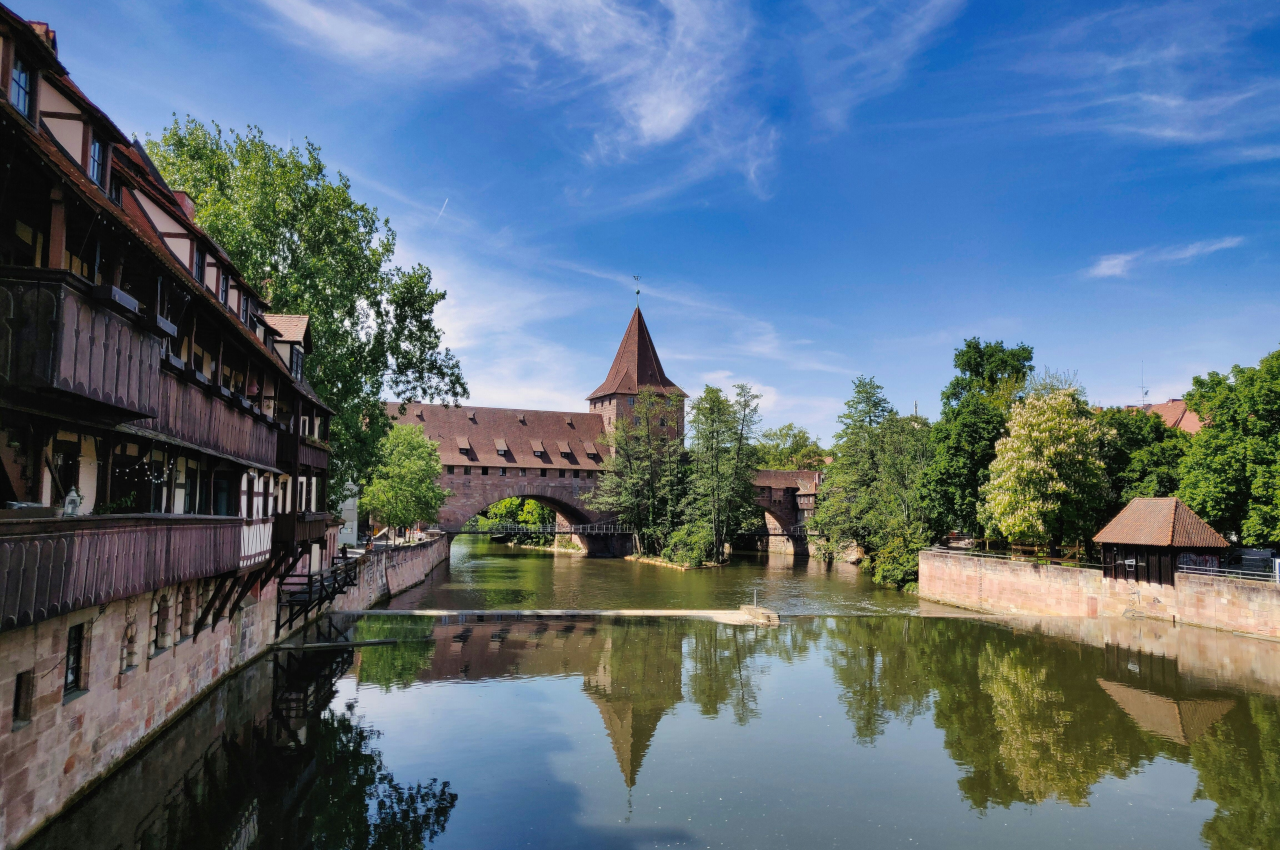
Getting to Nuremberg and exploring the region by public transportation is very simple. The city has a strategic location, excellent train connections, and a compact historic center that can easily be explored on foot.
Continue planning your trip to Nuremberg
- When to visit Nuremberg: discover the weather, seasons, and the best time to visit.
- Things to do in Nuremberg: see the main attractions, museums, and experiences around the city.
- Where to stay in Nuremberg: find the best neighborhoods and accommodation tips.
- Where to eat in Nuremberg: discover restaurants, Franconian specialties, and gastronomic experiences.


