


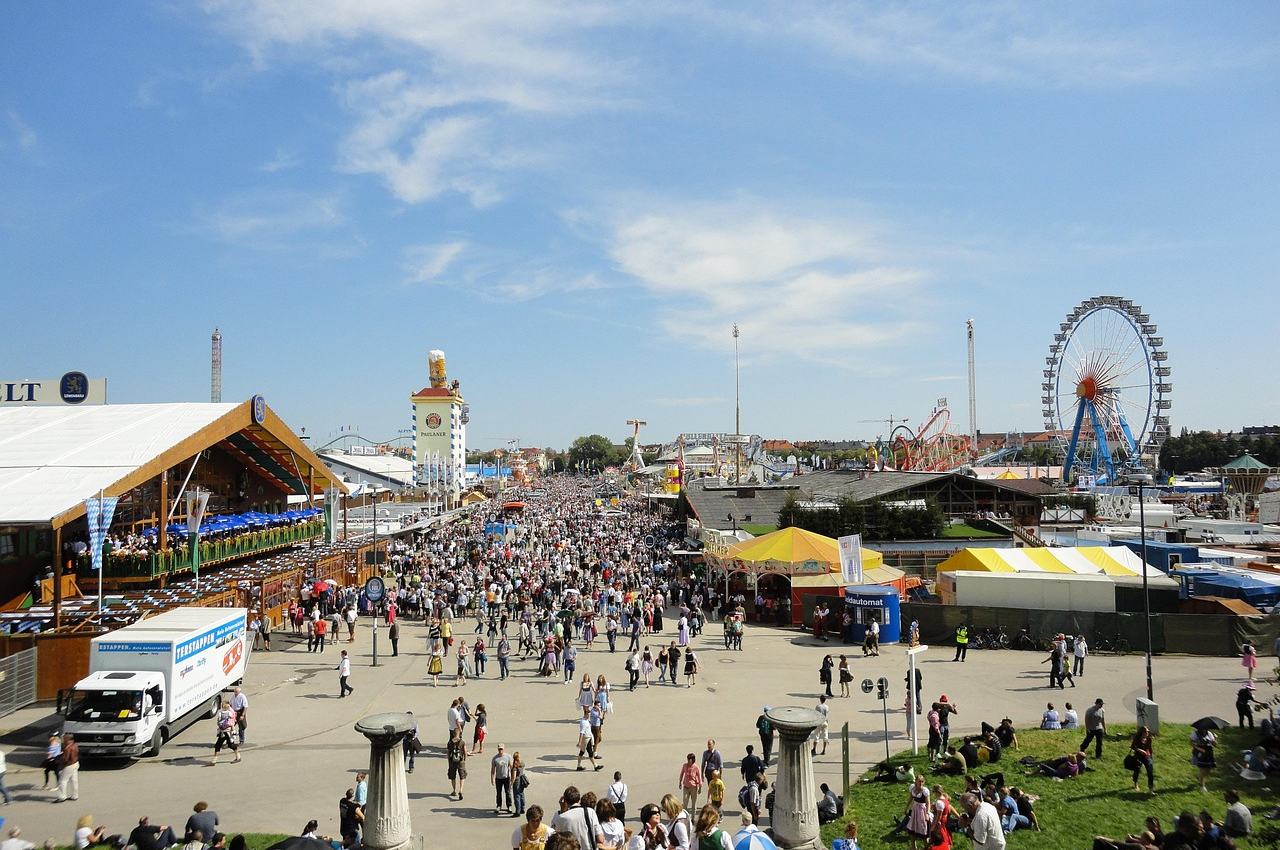
Oktoberfest in Munich is much more than a beer festival. It is one of Germany’s biggest cultural celebrations, bringing together Bavarian music, traditional food, regional clothing, amusement rides and visitors from all over the world.
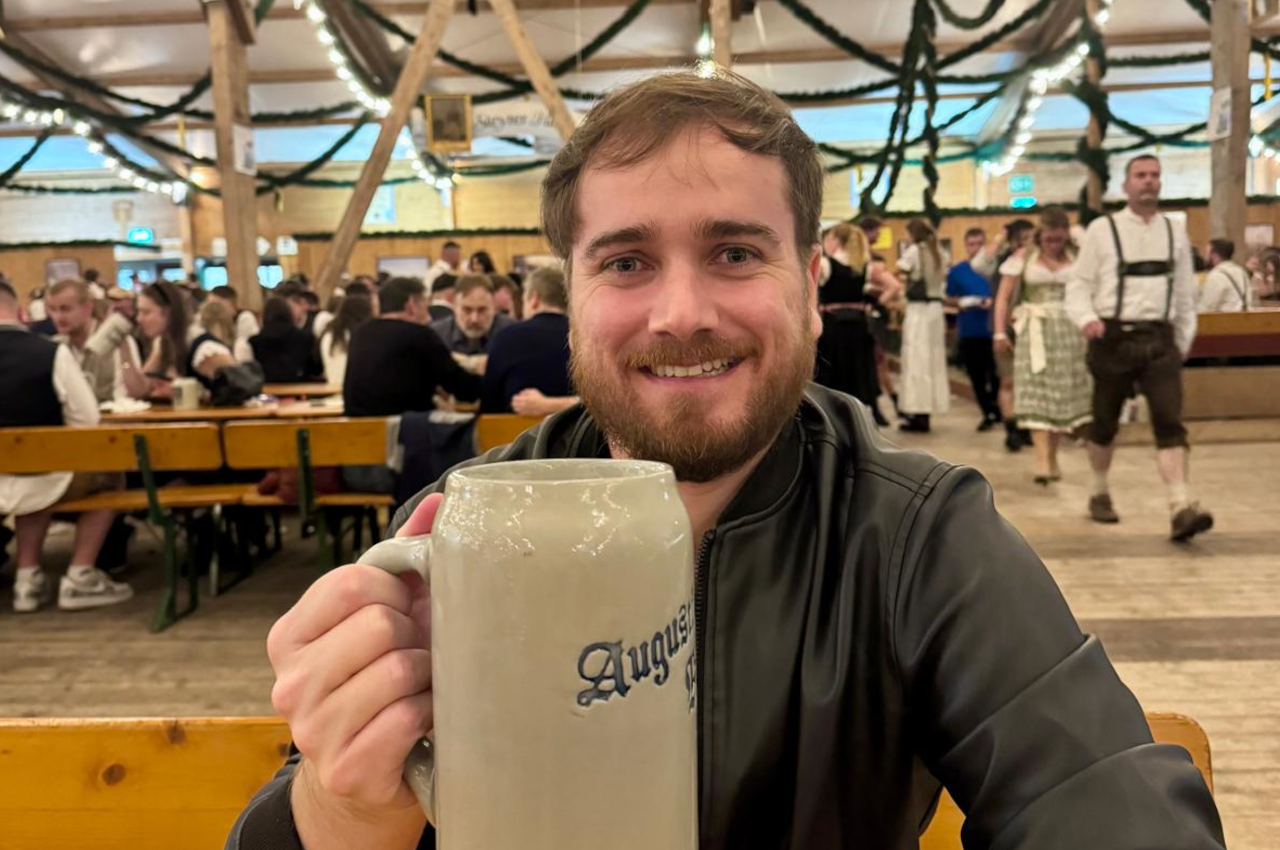
And I can say this from personal experience: we went to Oktoberfest in 2025 and absolutely loved it. We enjoyed it so much that we came back several times during the 15 days of the festival, because every visit had a different atmosphere.
In this guide, I will share everything you need to know to visit Oktoberfest 2026: dates, how to get there, prices, tents, reservations, food, traditional clothing and practical tips we learned from our own experience.
What you will find in this guide:
How did Oktoberfest start?
Oktoberfest began in 1810 as a celebration of the wedding of Crown Prince Ludwig of Bavaria and Princess Therese of Saxe-Hildburghausen.
The first festival was held with a horse race on the fields that we now know as Theresienwiese, named in honor of Princess Therese.
Over the years, the event grew and incorporated elements that are now part of Bavarian culture: breweries, traditional music, typical food, regional clothing and large beer tents.
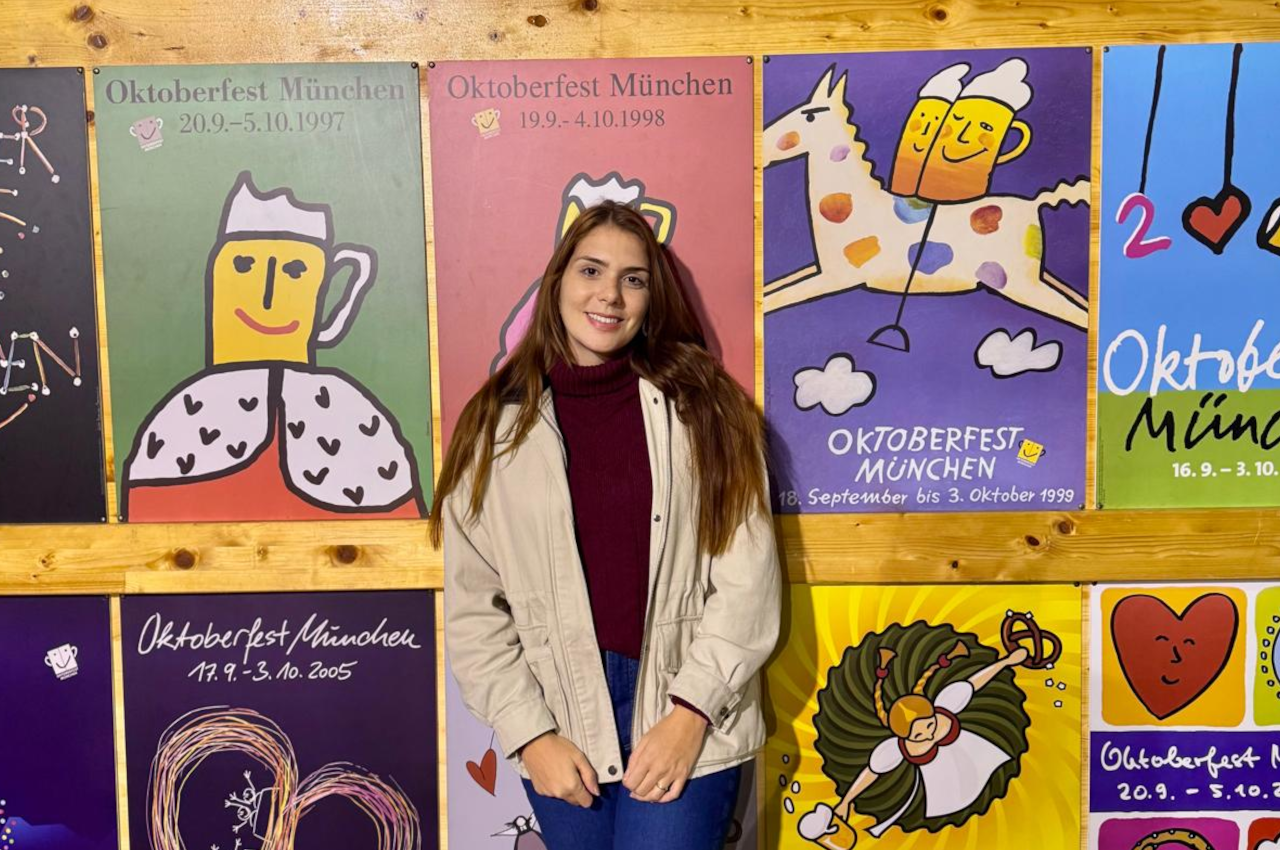
When is Oktoberfest Munich 2026?
Oktoberfest 2026 will take place from September 19 to October 4, 2026, at the traditional Theresienwiese grounds in central Munich.
Despite its name, most of the festival happens in September. This change was made historically to take advantage of better temperatures and longer days.
📅 Oktoberfest 2026
- Date: September 19 - October 4, 2026
- Location: Theresienwiese
- Duration: 16 days
- Entrance: Free
- Best time to visit: Weekdays and early afternoon
How to get to Oktoberfest in Munich?
Oktoberfest takes place at Theresienwiese, a central area of Munich with excellent public transport connections.
My main tip: do not go by car. Parking is difficult, and if you plan to drink, public transportation is definitely the best option.
🚇 U-Bahn (Subway)
The closest stations are:
- Theresienwiese
- Goetheplatz
- Poccistraße
My tip is to avoid Theresienwiese station during peak hours, as it can get extremely crowded.
🚆 S-Bahn
Hackerbrücke station is a great option. From there, it is around a 10-minute walk to the entrance.
Can you walk there?
Yes! If you are staying in central Munich, especially near Hauptbahnhof (the main train station), you can easily walk to Oktoberfest in around 15 minutes.
Oktoberfest Map
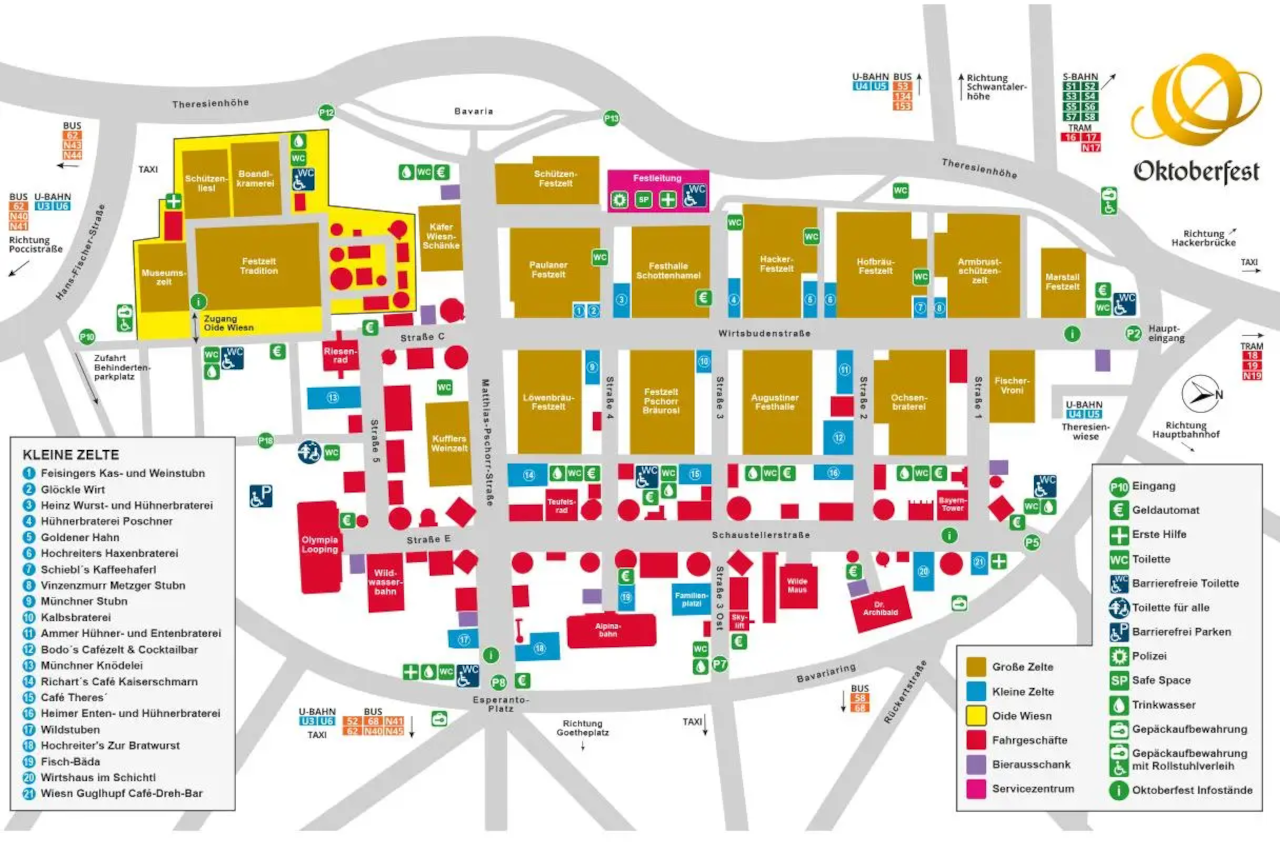
Theresienwiese is a huge area, so it is worth checking the map before arriving to locate the tents, bathrooms, entrances and attractions.
I know this map can look a little confusing at first, so let me help you understand it: the dark yellow points represent the main Oktoberfest tents, the red points show amusement rides and food areas, the green points indicate bathrooms, ATMs and important services, while the bright yellow area represents Oide Wiesn, the historical Oktoberfest area.
Oktoberfest Opening Hours 2026
| Day | Opening hours |
|---|---|
| Monday to Thursday | 10 AM to 11:30 PM |
| Friday | 10 AM to midnight |
| Saturday | 9 AM to midnight |
| Sunday | 9 AM to 11:30 PM |
My tip: if this is your first Oktoberfest, go during the week. It is much easier to walk around, take photos and find a seat inside the tents.
How much does Oktoberfest cost?
Entrance to Oktoberfest is free. You only pay for food, drinks, attractions and souvenirs.
🍺 Beer
A traditional Maß (1 liter beer mug) costs approximately between €14 and €16.
🍗 Food
Traditional dishes usually cost between €10 and €25.
🎡 Rides
Amusement park attractions usually cost between €5 and €15.
In my opinion, a comfortable budget is around €50 to €70 per person to enjoy the day without worrying about every expense.
Tip: bring some cash. Although cards are accepted in some places, cash is still widely used inside the tents, especially for tips.
Do I need to reserve a table inside the tents?
It depends. You can enter the tents without a reservation and look for available tables, especially during weekdays and early afternoon.
However, during busy times such as Friday nights, Saturdays, holidays and the first and last days of the festival, finding a seat can be almost impossible.
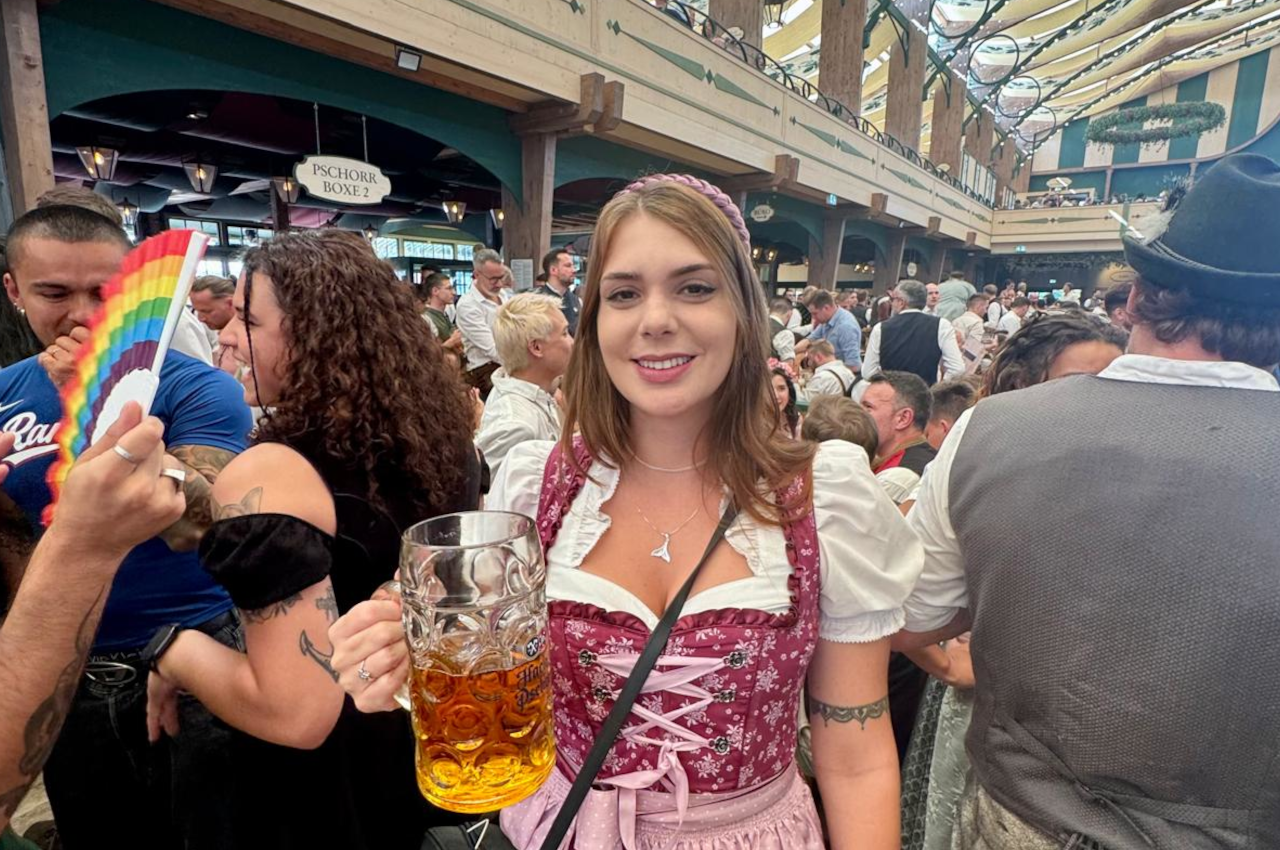
How to reserve a table at Oktoberfest?
Each tent has its own reservation system. There is no single official platform for the entire Oktoberfest.
Usually, reservations are made for a complete table (normally around 10 people) and include vouchers that can be used for food and beer inside the tent.
I know finding a table at Oktoberfest can be a little confusing, especially because every tent has a different reservation system. A tool that can help a lot is Oktoberfest Table Alert .
With it, you can check available reservations from different tents in one place, without having to visit each brewery's website separately to search for available times.
Step by step:
- Choose the tent you want to visit.
- Go to the official website of the tent and look for "Reservierung" or "Reservation".
- Choose the date, time and number of people.
- Pay for the vouchers.
- Bring your reservation confirmation on the day of your visit.
What are the main Oktoberfest tents?
Oktoberfest has 17 large tents and 21 smaller ones. Each one has a different atmosphere: some are more traditional, others more international, and some are famous for their food.
Here are some of the main ones:
🍺 Augustiner Festzelt
One of the favorites among Munich locals. Augustiner is one of the city's most traditional beers and is still served from wooden barrels.
Ideal for: anyone looking for a more traditional Bavarian experience.
🌎 Hofbräu Festzelt
Probably the most famous tent among international visitors. It is huge, lively and usually filled with music and people singing.
Ideal for: first-time visitors and anyone looking for a big party atmosphere.
🎵 Hacker-Festzelt
One of the most beautiful tents, famous for its decorated ceiling representing the Bavarian sky.
Ideal for: those who want a unique visual experience.
🥨 Paulaner Festzelt
One of the largest tents at the festival, with music, traditional food and a classic Oktoberfest atmosphere.
Ideal for: groups and first-time visitors.
🐟 Fischer-Vroni
Famous for the traditional grilled fish on a stick, known as Steckerlfisch.
Ideal for: anyone who wants to try something different.
🍻 Schottenhamel
This is where the official Oktoberfest opening takes place. It is the tent where Munich's mayor taps the first beer barrel with the famous phrase "O'zapft is!".
Ideal for: those who want to experience the tradition of the festival.
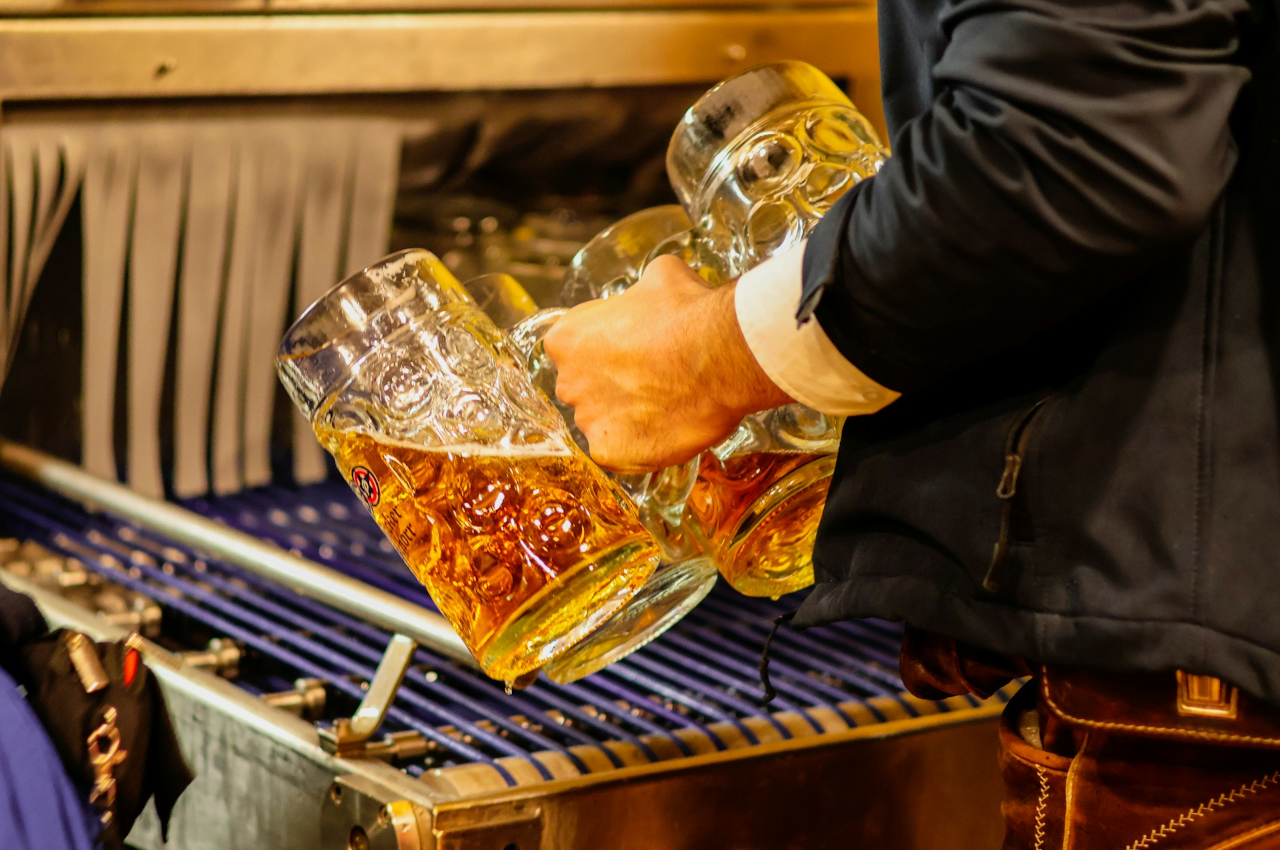
The Old Oktoberfest: Discover Oide Wiesn
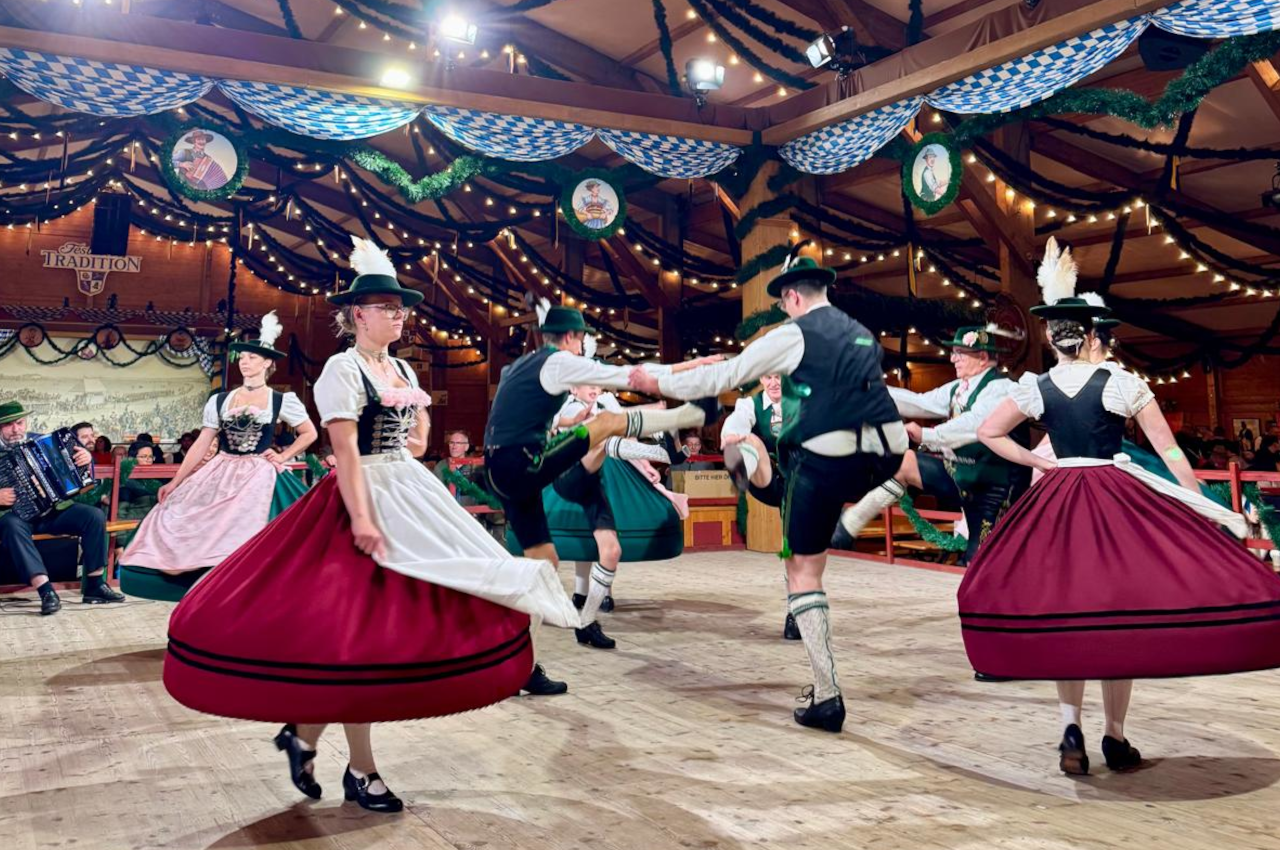
Few tourists know this, but inside Oktoberfest there is a special area called Oide Wiesn, which means "old Oktoberfest" in the Bavarian dialect.
It was created in 2010 to celebrate the festival's 200th anniversary and keeps an atmosphere much closer to the original Oktoberfest: traditional music, historic rides, smaller tents and fewer crowds.
🎡 Is it worth visiting?
In my opinion, yes! Especially if this is your first Oktoberfest.
- A more relaxed atmosphere.
- Traditional Bavarian music.
- Cheaper historic rides.
- An experience closer to the original festival.
The entrance costs approximately €4 per person. Children up to 14 years old usually enter for free and after 9 PM, admission is often free.
My tip: if you have time, visit the traditional Oktoberfest and then walk to Oide Wiesn. Both areas show completely different sides of the festival.
What to eat at Oktoberfest?
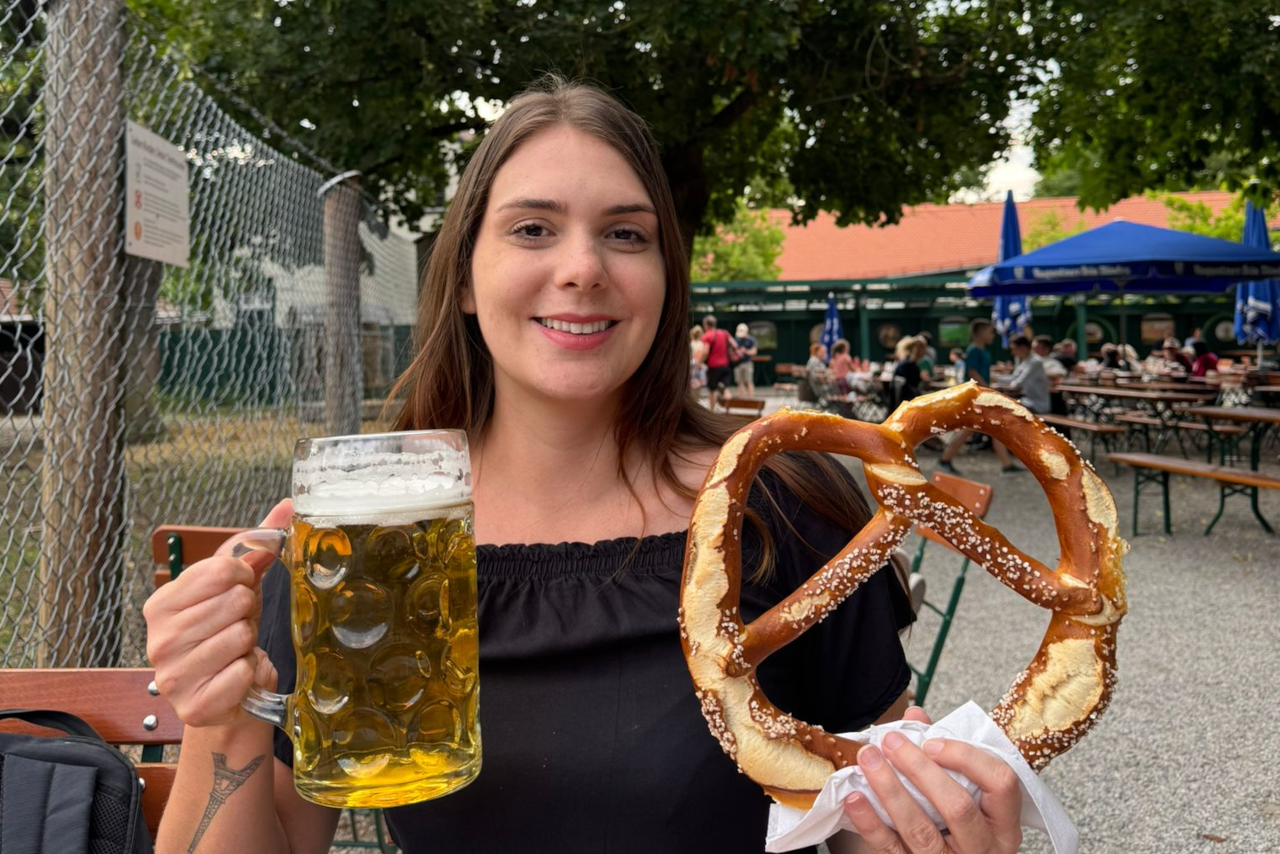
Food is an essential part of the experience. Even if you do not drink beer, you can enjoy the festival through the traditional Bavarian dishes.
-
🍗 Hendl (Roast chicken)
The most famous Oktoberfest dish. The skin is crispy and the meat is very tender. -
🥨 Brezn (Giant pretzel)
The traditional Bavarian pretzel is almost mandatory and goes perfectly with a Maß. -
🐷 Schweinshaxe (Pork knuckle)
A Bavarian classic served with sides such as potatoes or sauerkraut. -
🌭 Würstl (Sausages)
A quick option to try different types of German sausages. -
🍎 Apfelstrudel
For dessert lovers, apple strudel and Kaiserschmarrn are great choices.
Is it mandatory to wear a Dirndl or Lederhosen?
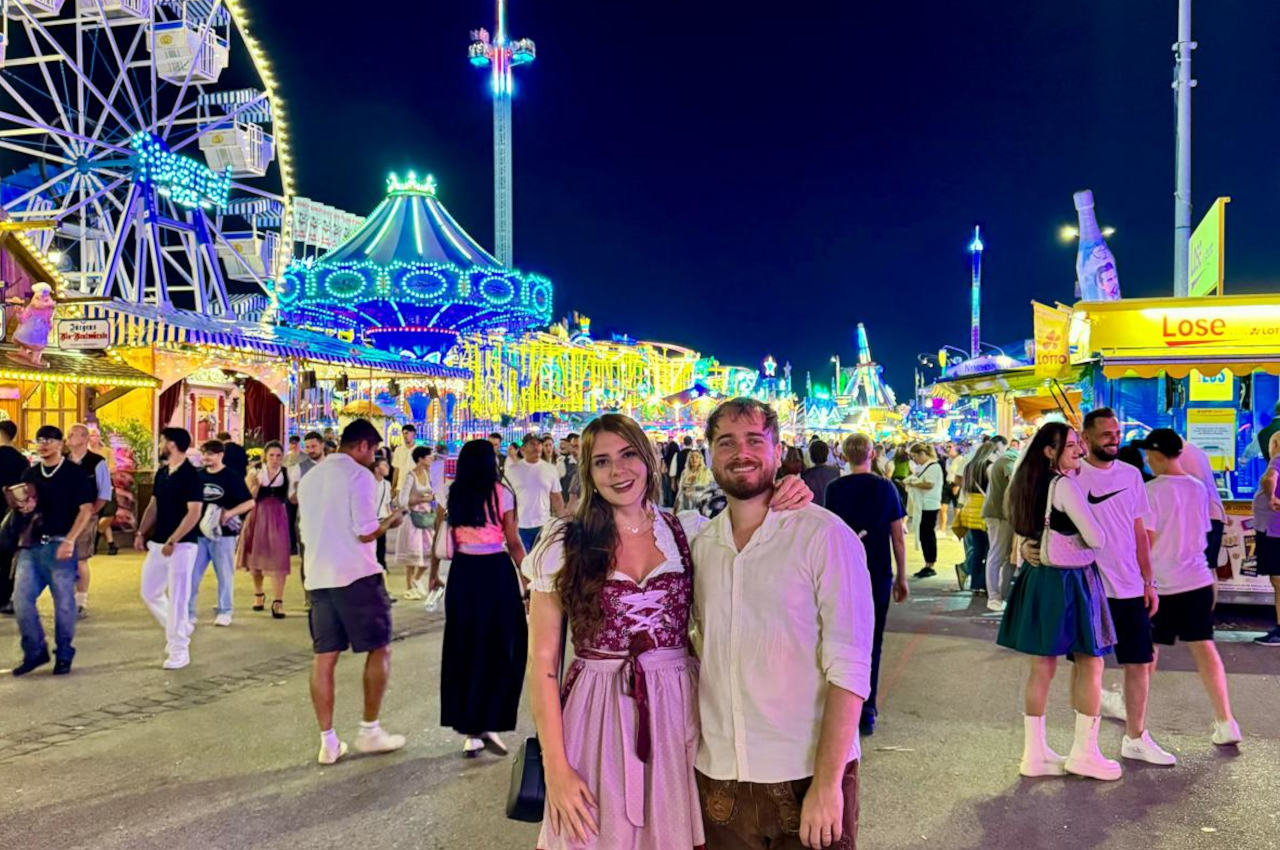
No. You can visit Oktoberfest wearing normal clothes. However, wearing traditional clothing makes the experience much more fun and is an important part of Bavarian culture.
- Dirndl: traditional dress worn by women.
- Lederhosen: traditional leather trousers worn by men.
One interesting detail about the Dirndl is the apron bow. Traditionally:
- Right side: in a relationship or married.
- Left side: single.
- Back: widow or waitress.
Where to buy Dirndl and Lederhosen in Munich?
You do not need to spend hundreds of euros to join the Oktoberfest atmosphere. Munich offers traditional stores, cheaper options and second-hand alternatives.
👗 Traditional stores
- Lodenfrey
- Angermaier
- Hirmer
💰 Budget options
- C&A
- New Yorker
- Galeria
♻️ Second-hand
- Vinted
- Local thrift stores
- Re-Sales München
Is Oktoberfest good for children?
Yes! Despite its reputation as a beer festival, Oktoberfest is also a family-friendly event. The amusement park, food and decorations make it enjoyable for visitors of all ages.
Tuesdays are especially popular with families because of the traditional Familientag, when many attractions offer discounted prices.
- Children under 6 years old cannot stay inside the tents after 8 PM.
- Baby strollers have restrictions during busy hours.
- The amusement park area is one of the favorite parts for children.
Important Oktoberfest 2026 rules
Before visiting, pay attention to the entrance rules:
- Large bags are not allowed. Bring only what you really need.
- Glass bottles, sharp objects and sprays are prohibited.
- Bicycles, scooters and skateboards are not allowed.
- Animals are not allowed, except guide dogs.
- Do not bring your own drinks.
My final recommendation: if this is your first Oktoberfest, choose a weekday, arrive early, explore the tents, try the traditional food and make time to visit Oide Wiesn.
This is the best way to experience both sides of the festival: the modern Oktoberfest with its huge beer tents and the Bavarian traditions that created this celebration more than 200 years ago.
Our recommended partners
These are companies and services that we use or recommend to make your trip easier. By booking through our links, you support Feitos para Viajar at no extra cost.
Accommodation for your trip
Find hotels, apartments and accommodations for every travel style and budget.
Tours and experiences
Book tours, tickets and unforgettable experiences in the destinations you visit.
Internet while traveling
Stay connected with an international eSIM to use maps, translation and apps without relying on Wi-Fi.
International payments and exchange
Save money abroad with an international account and competitive exchange rates.
Travel insurance
Travel with peace of mind with coverage for medical emergencies and unexpected situations.
Train and bus tickets
Compare and book train and bus tickets across Europe in one simple platform.

Written by
Feitos para Viajar
We're Fernanda and Vinicius, travel content creators since 2021. As software engineers living in Germany, we share real travel experiences to help you discover both iconic destinations and hidden gems.
Gostou das nossas dicas? Então compartilhe este blog com seus amigos e siga-nos para mais sugestões de viagem! Estamos aqui para ajudar você a explorar o mundo com confiança e planejamento.


