


When planning a trip to Europe, there are many details to consider — flights, accommodations, transportation. But one crucial aspect that is often overlooked is travel insurance. If you're wondering whether travel insurance is mandatory in Europe, the short answer is: yes — it is required for travelers entering the Schengen Area. In this guide, we explain everything you need to know before purchasing yours.
What you'll find in this post:
Why is Travel Insurance Mandatory in the Schengen Area?
The Schengen Area includes 27 European countries that have abolished passport controls at their internal borders. To enter these countries, travelers must meet certain requirements — one of which is having valid travel insurance covering medical emergencies with a minimum of €30,000 in coverage.
The main reason for this requirement is to ensure that travelers can cover medical expenses in case of illness or accident during their stay. Healthcare in European countries can be extremely expensive for uninsured foreigners, and travel insurance acts as a safety net for both the traveler and the host country's healthcare system.
Schengen Area countries include: Germany, France, Italy, Spain, Portugal, Austria, Belgium, Denmark, Finland, Greece, Netherlands, Luxembourg, Norway, Poland, Sweden, Switzerland, and others. Even if the immigration officer doesn't ask for proof at the border, you may be required to present it — and traveling without insurance can result in entry denial.
What Should Travel Insurance Cover?
To comply with Schengen Area requirements, your insurance must have at least €30,000 in coverage. In practice, good plans typically offer far more than the minimum. Here's what to look for:
- Emergency medical expenses: Medical treatments, hospital stays, surgeries, and ambulance services. This is the most important coverage — always check the maximum limit.
- Repatriation: If you need to be transported back to your home country for health reasons, the insurance covers the costs — which can be enormous without coverage.
- Trip cancellation or interruption: If an unforeseen event forces you to cancel or cut short your trip (illness, family emergency, etc.), the insurance can reimburse flights and accommodation.
- Lost or stolen luggage: Compensation for luggage that is lost, stolen, or damaged by the airline or during travel.
- Flight delay: Some plans cover extra expenses like meals and accommodation during extended delays.
- Legal assistance: Available in more comprehensive plans, covering attorney fees in case of incidents abroad.

TIP: Pay close attention to exclusions. Most basic plans don't cover extreme sports, pre-existing conditions, or uncontrolled chronic illnesses. Always read the general terms and conditions before purchasing.
How Much Does Travel Insurance for Europe Cost?
The cost of travel insurance varies depending on the trip duration, the traveler's age, the destination, and the coverage selected. As a general guide:
- 7-day trip: Between R$80 and R$250, depending on the plan and insurer.
- 15-day trip: Between R$150 and R$450.
- 30-day trip: Between R$250 and R$700.
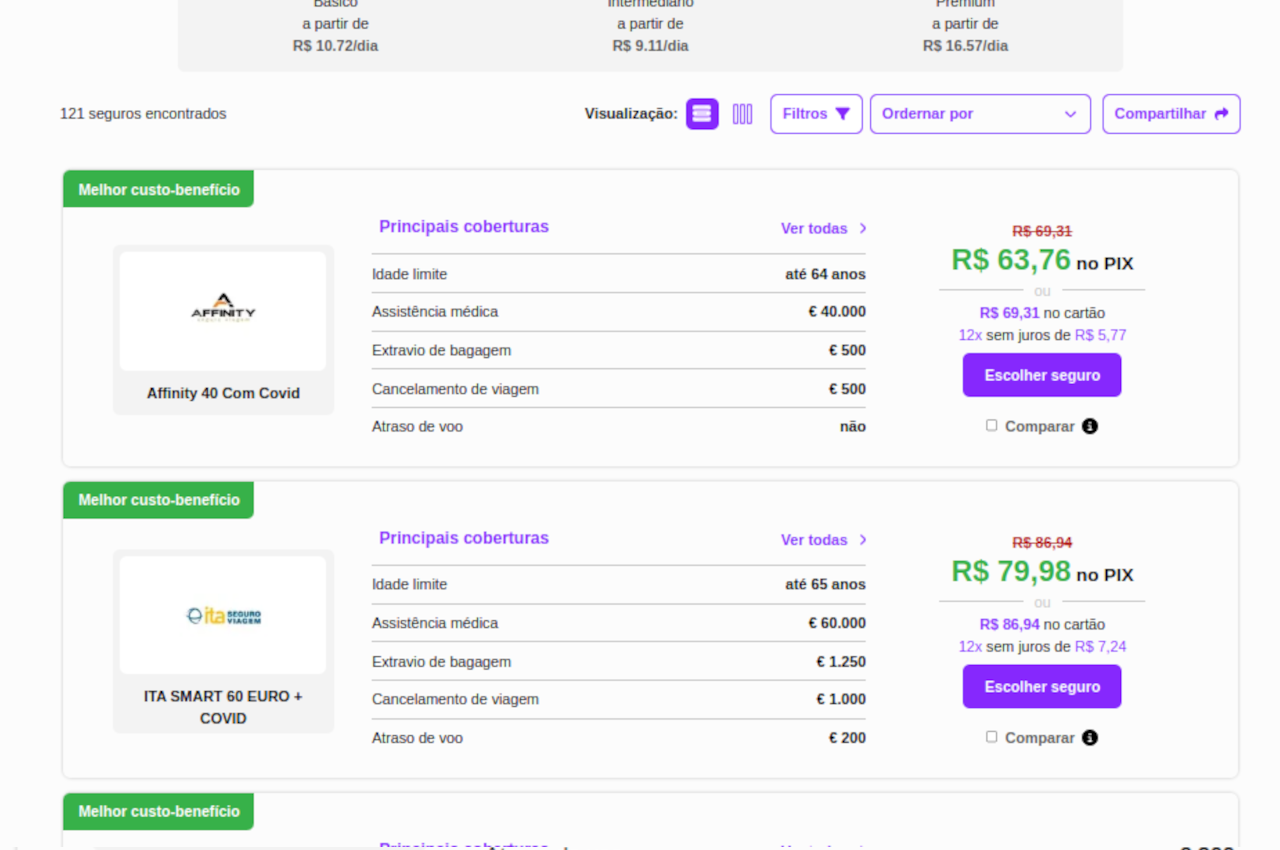
Travelers over 60 typically pay more, as do those who choose premium plans with higher limits or adventure sports coverage. The good news is that using a comparison platform like Real Seguros, you can compare plans from multiple insurers side by side and choose the best value — with exclusive discounts through the link.
How to Choose the Best Travel Insurance?
With so many options available, choosing can seem overwhelming. But with a few clear criteria, it becomes much easier:
1. Evaluate the medical coverage
The Schengen minimum is €30,000, but we recommend choosing a plan with at least €100,000 in medical expense coverage. Medical emergencies in Europe — especially surgeries or ICU stays — can cost tens of thousands of euros.
2. Check the insurer's reputation
Research complaints and reviews to assess how the insurer handles emergencies. An insurer that is slow to respond during a crisis can be worse than having no insurance at all.
3. Consider your age and health
If you're over 60 or have a pre-existing condition, look for insurers that offer coverage for those situations. Some have specific plans with tailored benefits.
4. Review the exclusions
Read carefully what is not covered. Activities like skiing, scuba diving, and other sports usually require additional coverage.
5. Compare prices on a trusted platform
Using a comparison platform like Real Seguros lets you compare plans from multiple insurers at once, with access to exclusive discounts. It's the most practical way to secure the best plan at the best price.
What Happens if You Travel Without Insurance?
Traveling to the Schengen Area without travel insurance isn't just risky — it can have serious consequences:
- Visa or entry denial: For travelers who need a Schengen visa, lack of insurance can result in application denial. At the border, immigration officers may ask for proof of coverage.
- Enormous medical bills: A few days in a hospital in Germany or France can cost €5,000 to €30,000 or more — costs that could financially devastate an unprotected traveler.
- No repatriation coverage: In the event of a serious accident, medical transport back home can cost between €15,000 and €50,000 without insurance coverage.
- Lost money on cancellations: If you need to cancel the trip due to unforeseen events, you lose flights and accommodation costs with no chance of reimbursement.
The Travel Insurance We Chose
Since the question of which travel insurance to choose is so common, I want to share what we personally use. We typically opt for the most affordable plan that meets Schengen requirements, since our trips are for tourism and don't involve extreme sports.
For Europe, we generally choose insurance from Affinity or ITA Travel Insurance — both meet all Schengen Area requirements and offer solid coverage at an accessible price. We use Real Seguros to compare and purchase, where the link already gives you a discount.
Keep in mind that prices vary depending on duration, destination, and traveler profile — it's always best to run a simulation before deciding.
FINAL TIP: Purchase your travel insurance as soon as you buy your flights — don't leave it to the last minute. That way, you're already covered against cancellations from the moment of purchase.
Our recommended partners
These are companies and services that we use or recommend to make your trip easier. By booking through our links, you support Feitos para Viajar at no extra cost.
Accommodation for your trip
Find hotels, apartments and accommodations for every travel style and budget.
Tours and experiences
Book tours, tickets and unforgettable experiences in the destinations you visit.
Internet while traveling
Stay connected with an international eSIM to use maps, translation and apps without relying on Wi-Fi.
International payments and exchange
Save money abroad with an international account and competitive exchange rates.
Travel insurance
Travel with peace of mind with coverage for medical emergencies and unexpected situations.
Train and bus tickets
Compare and book train and bus tickets across Europe in one simple platform.

Written by
Feitos para Viajar
We're Fernanda and Vinicius, travel content creators since 2021. As software engineers living in Germany, we share real travel experiences to help you discover both iconic destinations and hidden gems.
Gostou das nossas dicas? Então compartilhe este blog com seus amigos e siga-nos para mais sugestões de viagem! Estamos aqui para ajudar você a explorar o mundo com confiança e planejamento.


