


If you are planning a trip to Europe, you have probably heard of the EES, the European Union’s new Entry/Exit System. With so many technological changes, it’s natural to wonder: “How will this work in practice?”. In this article, we will explain everything clearly, thoroughly, and practically, without an overload of technical terms.
What is the EES?
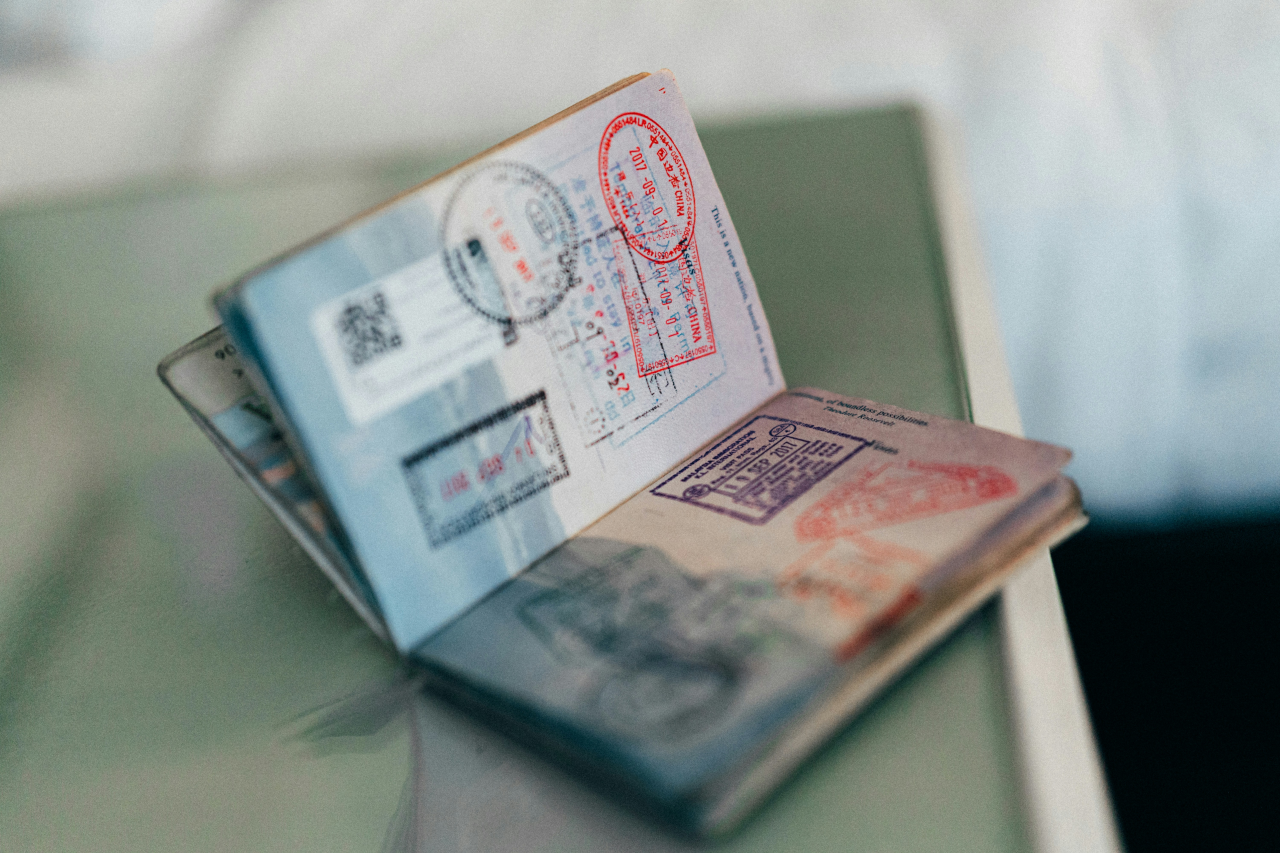
The EES (Entry/Exit System) is an electronic system that replaces the old passport stamp. Through it, every entry and exit from the Schengen Area will be digitally recorded, using biometric data and basic personal information.
The system automatically records:
- Your entry and exit data
- Total time spent in the Schengen Area
- Photo taken at the control point
- Fingerprint scans (all 10 fingers)
In practice, this means you no longer need to worry about confusing stamps or manual records. Everything is stored digitally, allowing border control to be faster, more accurate, and safer.
Why was the EES created?
The EES was introduced in response to the increasing flow of travelers in Europe and the need to modernize border control. Previously, officers relied on manual stamps, which could lead to errors, long lines, and confusion about the number of days allowed in the Schengen Area.
In addition to speeding up the process, the system also enhances security: it helps identify fake passports, fraud attempts, or irregular stays. This protects both European citizens and travelers themselves, ensuring everyone complies with entry and stay rules.
Another important benefit is the reduction of bureaucracy for travelers. With the EES, you no longer need to explain how long you stayed in Europe on your last trip — the history is already recorded in the system.
How does the EES work in practice?
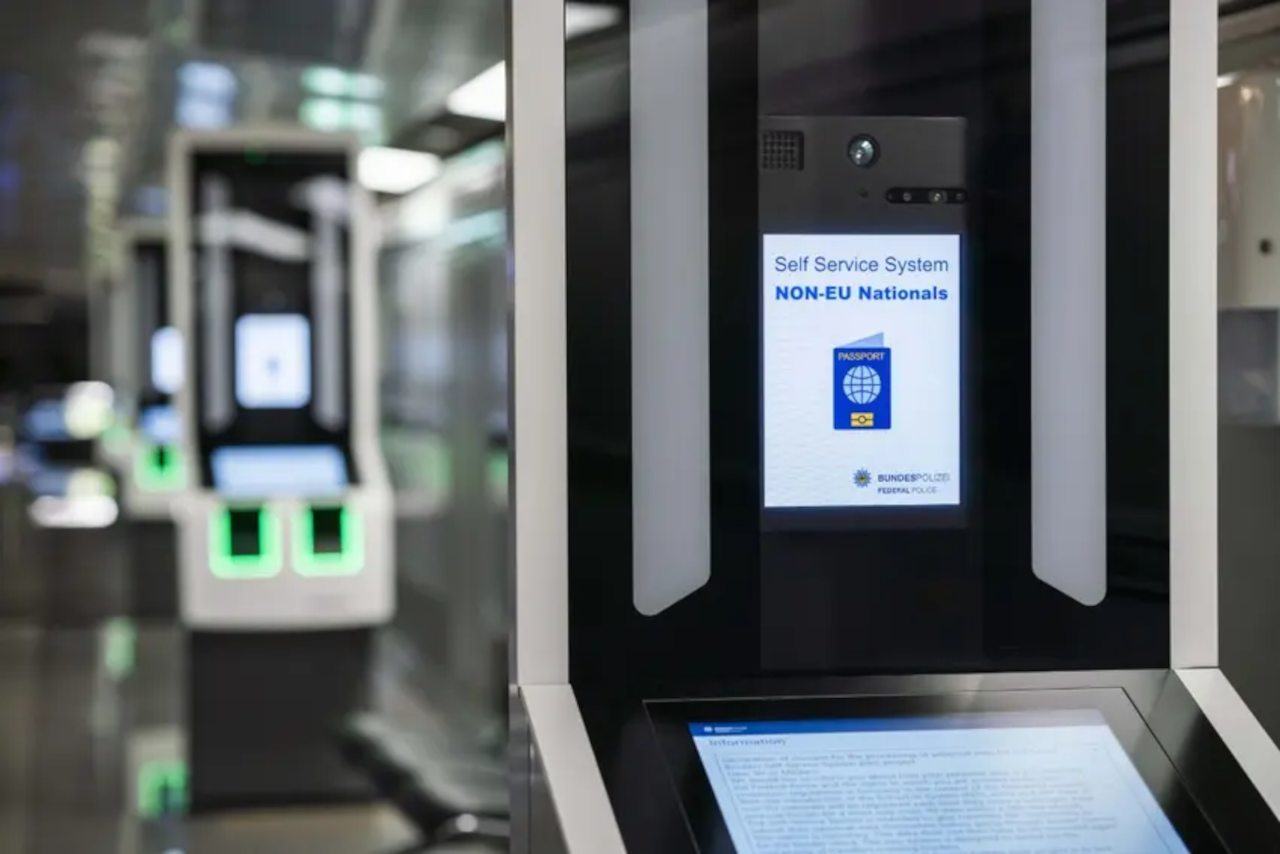
Upon arrival at a European airport, you will go through a control point where your data will be collected. This includes taking a photo and scanning fingerprints, usually at self-service kiosks or automated booths. The process is quick and usually only required at your first entry after the system’s implementation.
On subsequent visits to Europe, you won’t need to repeat the entire procedure: the system already recognizes your data, making immigration faster. Upon departure, the record is automatic — you probably won’t even notice it’s being registered.
Does the 90-day rule still apply?
Yes. The EES does not change the maximum stay: you can stay 90 days within a 180-day period in the Schengen Area. The big difference is that now the system automatically calculates how many days you have left, avoiding mistakes or confusion.
Does the EES replace ETIAS?
No. The EES only replaces the passport stamp. The ETIAS, on the other hand, will be a mandatory pre-travel authorization for citizens of countries that do not need a visa for the Schengen Area, similar to the United States’ ESTA.
In short: you apply for ETIAS before your trip, and upon arrival in Europe, you go through the EES. Both work together but serve different purposes: one is a pre-authorization, the other is a digital record of entry and exit.
If you want to learn everything about ETIAS and how to apply for it, click here.
Will there be more inspections?
Yes. The EES automatically identifies anyone who exceeds the 90-day limit. If you plan to stay longer, it is essential to have all documents on hand: return ticket, proof of accommodation, proof of financial means, and, of course, mandatory travel insurance. If you are looking for travel insurance with good value and full coverage, click here to learn more.
Additionally, authorities may check your history of entries and exits across different Schengen countries, making border control more rigorous and reliable.
Tips for traveling with the EES
- Always carry a valid and well-maintained passport.
- Apply for ETIAS before your trip to avoid delays.
- Bring proof of accommodation and return tickets, especially for long trips.
- Be prepared to use kiosks or biometric booths upon arrival.
- Do not exceed 90 days in any Schengen country without authorization — the system records this automatically.
Our opinion
When I first heard about the EES, I thought it would be complicated. But after researching and talking to frequent travelers, I realized that the system is very user-friendly. It helps organize and simplify the process, reducing the stress of having to prove your previous trips.
For us Brazilians, who often need to explain how long we stayed last time, the EES is a great ally. It ensures transparency and security, making traveling through Europe a smoother experience.
In summary: The EES may make your first entry slightly longer due to biometric collection, but the benefits are worth it. It makes traveling in Europe safer, more organized, and modern. Additionally, the system helps prevent future issues with overstays and ensures that all records are accurate.
Our recommended partners
These are companies and services that we use or recommend to make your trip easier. By booking through our links, you support Feitos para Viajar at no extra cost.
Accommodation for your trip
Find hotels, apartments and accommodations for every travel style and budget.
Tours and experiences
Book tours, tickets and unforgettable experiences in the destinations you visit.
Internet while traveling
Stay connected with an international eSIM to use maps, translation and apps without relying on Wi-Fi.
International payments and exchange
Save money abroad with an international account and competitive exchange rates.
Travel insurance
Travel with peace of mind with coverage for medical emergencies and unexpected situations.
Train and bus tickets
Compare and book train and bus tickets across Europe in one simple platform.

Written by
Feitos para Viajar
We're Fernanda and Vinicius, travel content creators since 2021. As software engineers living in Germany, we share real travel experiences to help you discover both iconic destinations and hidden gems.
Gostou das nossas dicas? Então compartilhe este blog com seus amigos e siga-nos para mais sugestões de viagem! Estamos aqui para ajudar você a explorar o mundo com confiança e planejamento.


